Woburn, MA OUI Defense Lawyer
Arrested for OUI in Woburn? We Understand.
We Get You Safely Through the Storm.
Defending good people who have a really bad day.


.png)


OUI Defense at Woburn District Court
We have been defending clients in Middlesex County courts for over 30 years, including OUI cases from first offenses to repeat charges with serious mandatory penalties.
We know this courthouse, its procedures, and the people who work here.
If you or someone you care about has been charged with OUI in Woburn, Burlington, Winchester, Wilmington, Stoneham, Reading, or North Reading, Woburn District Court is where your case will be heard, and we are ready to help.
If you are indicted, your case would then be heard at Middlesex Superior Court, which also sits in Woburn. We have extensive experience with OUI and related cases, including a successful trial record.
.jpg)
Woburn District Court


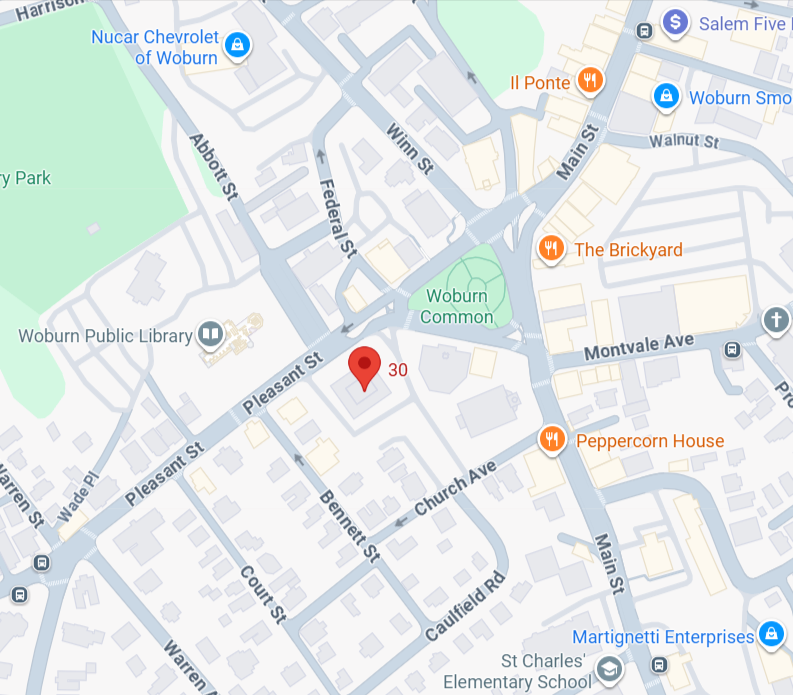
About Woburn District Court
- Judge's Lobby: Hon. Jane D. Prince
- Clerk-Magistrate: Julie M. Veno, Acting Clerk-Magistrate
- Hours: Monday – Friday, 8:30 a.m. – 4:30 p.m.
- Free parking at the courthouse. Public Wi-Fi available. MassRelay: Dial 711.
For more information about getting to this court, including transportation and parking options, click here.
Facing an OUI Charge in Woburn? Here's What You Need to Know.
An OUI arrest brings a flood of questions, and most of them cannot wait. Seven local police departments bring cases to this court, and so do State Police, who patrol the interstates running through and around Woburn.
Below are honest answers to the questions we hear most from people arrested in Woburn and the towns around it, but nothing here is a substitute for talking to a lawyer about your specific case, tonight if you need to.
What Is Different About an OUI Case in This Court?
Woburn District Court serves seven communities: Burlington, North Reading, Reading, Stoneham, Wilmington, Winchester, and Woburn. That is a wide net, and it means the person sitting next to you in the courtroom may have driven twenty minutes to get there.
Woburn sits where I-93 and I-95 meet, and a large share of the OUI cases in this building start on those highways or on the ramps and connectors feeding them. Highway stops tend to turn on different facts than neighborhood stops. Speed, lane position, and what a trooper could actually see from a moving cruiser all matter more, and all of it is open to examination.
There is something else about this city that matters if your case is serious. Middlesex Superior Court sits in Woburn as well, on TradeCenter Drive. If an OUI case is indicted as a felony, it moves to Superior Court, and for someone charged here that move does not mean traveling to another part of the county. Your case stays in the same city.
Worth sorting out before your next date. There is free parking at the courthouse and it sits on the 134 and 354 bus routes. The commuter rail will get you as far as Winchester Center, but you will need a ride from the station, so plan that leg in advance if you are facing a suspension.
What Does the Commonwealth Have to Prove?
To convict you of OUI in Massachusetts, the prosecution must prove three things beyond a reasonable doubt, and each one can be contested:
• Operation of a motor vehicle. This does not require the car to be moving. Massachusetts courts have ruled that a person sitting in a parked car with the engine running was legally "operating" it, because operation is defined broadly as manipulating any part of the vehicle that could set it in motion, not just actively driving down the road.
• On a public way, or somewhere the public has access, such as a parking lot. Whether a specific location legally counts as a public way is often disputed and can be challenged.
• Under the influence of alcohol or drugs. This is a matter of degree, not a fixed line, and field sobriety tests and breath tests are imperfect tools for measuring it. This is exactly where a strong defense can make the difference.
Did You Take a Breath Test, Or Refuse One?
If you took the test and failed: In Massachusetts, the legal limit is a blood alcohol concentration (BAC) of 0.08 percent for drivers 21 and over (0.02 percent if you're under 21). A test result over the limit does not end the case. Both the reliability of the machine and what your BAC actually was at the time you were driving, rather than at the station an hour later, can be challenged. We set out those specific defenses further down this page.
If you refused the test: Massachusetts is an implied consent state, meaning refusing a breath test triggers its own automatic license suspension through the Registry of Motor Vehicles, separate from the criminal case itself. Importantly, that refusal cannot be used as evidence against you at a criminal trial.
The RMV test-refusal suspension and the criminal case run on two different tracks, and winning the criminal case does not automatically lift an RMV suspension. We handle both.
Did the Police Conduct Field Sobriety Tests?
Field sobriety tests, the walk and turn, one leg stand, and similar exercises, are meant to give an officer probable cause for arrest. They are also highly subjective, frequently performed incorrectly, and often conducted under conditions (weather, footwear, lighting, medical issues) that make them unreliable. Unlike a breath test, declining field sobriety tests does not trigger an automatic RMV license suspension, a distinction worth understanding right after an arrest. Whether these tests were administered properly, and whether the results should ever reach a jury, is one of the first things we examine in every OUI case.
What Happens to My License?
License consequences depend on whether you're convicted, whether you refused testing, and how many prior OUIs you have.
Refusing the breath test triggers its own RMV suspension regardless of the outcome of the criminal case: 180 days for a first refusal, three years for a second, five years for a third, and a lifetime suspension for a fourth or subsequent refusal. This runs separately from, and typically before, any suspension that follows a conviction.
Suspension length and hardship eligibility scale with how many prior OUIs you have. See our full first offense and multiple offense breakdowns for exact fines and jail exposure.
Two of our other pages go deeper than this one: our overview of OUI defense in Massachusetts, and our guide to getting a hardship license while you are suspended. If you want the law itself in plain English, we have a page on the Massachusetts OUI statute.
What Are the Penalties for OUI in Massachusetts?
Penalties increase sharply with each subsequent offense, and Massachusetts uses a lifetime lookback, which means a prior OUI conviction from decades ago still counts. Below are the statutory penalties Massachusetts law provides upon conviction at each offense level, along with the outcome most people in that situation actually see in practice.
First Offense: most people never serve jail time.
• Statutory maximum: a fine of $500 to $5,000 and up to 2.5 years in the house of correction
• Most common outcome, the 24D program: a continuance without a finding, 1 to 2 years of probation, a 45 to 90 day license suspension with immediate hardship eligibility, and an alcohol education program. Completed successfully, no conviction appears on your record.
• If convicted outside the 24D program: a 1-year license suspension, with hardship available after 3 months
Second Offense: most people receive a suspended sentence rather than jail.
• Most common outcome: 2 years of probation, conditioned on a 14-day residential alcohol treatment program and outpatient aftercare, avoiding committed jail time
• Statutory range: a fine of $600 to $10,000 and 60 days to 2.5 years in the house of correction, with a mandatory minimum of 30 days if the court does impose committed jail time
• License: a 2-year suspension, with hardship available after 1 year, and a required ignition interlock device for 2 years beyond reinstatement
Third Offense (a felony): a real mandatory minimum applies.
• Fine of $1,000 to $15,000
• 180 days to 2.5 years in the house of correction, or 2.5 to 5 years in state prison, with a mandatory minimum of 150 days that cannot be suspended
• License: an 8-year suspension, with restricted work or school hardship available after 2 years, general hardship after 4 years, and a required ignition interlock device
Fourth Offense (a felony): no alternative disposition is available.
• Fine of $1,500 to $25,000
• Mandatory minimum of 1 year, up to 5 years in state prison
• License: a 10-year suspension
Fifth and Subsequent Offense (a felony):
• Fine of $2,000 to $50,000
• Mandatory minimum of 2 years, up to 5 years in state prison
• License: a lifetime suspension, with no hardship license available
A conviction also carries collateral consequences beyond the courtroom:
• It cannot be expunged from your record
• It can raise your auto insurance rates substantially
• It can affect professional licenses, immigration status, and jobs that require driving
Could This Become a Felony?
A first OUI is typically a misdemeanor, but certain factors raise the stakes considerably. If there was a minor passenger in the vehicle, if the incident caused an accident with injury, or if you have prior OUI convictions, the charge can carry felony-level exposure and more serious mandatory minimums upon conviction. In felony-level cases, you could be indicted, and the case would then be heard at Middlesex Superior Court, which also sits in Woburn. Whether any of these factors apply to your case is one of the first things we assess.
What Defenses Might Apply to My Case?
OUI cases are more defensible than most people realize. The Commonwealth must prove every element beyond a reasonable doubt, and the evidence against you, the stop, the tests, the breath test machine, is often weaker than it first appears. Depending on the facts of your arrest, some of the following may apply to your case.
• The initial stop: Police need a constitutionally valid reason, reasonable suspicion of a traffic violation or crime, before pulling you over. A stop based on a hunch, an uncorroborated tip, or a violation the officer cannot articulate can be challenged through a motion to suppress, which can result in the evidence that followed being thrown out entirely.
• Breath test procedure and maintenance: A breath test result is not automatically reliable. We examine whether the required observation period was followed without interruption, whether the two required samples fell within the allowed variance, and whether the specific machine's calibration and maintenance records were properly kept and disclosed. Gaps or irregularities in any of these areas can be the basis for excluding the result altogether.
• Cross examination of the officer on the roadside tests: An officer's scoring of these exercises is an opinion, not a measurement. We are often successful drawing out how the tests were actually administered, what was and was not written down at the time, and why performance on a roadside balance exercise says little about whether someone could drive safely.
• Rising BAC: Alcohol continues to absorb into the bloodstream after drinking stops. A BAC measured at the police station, sometimes an hour or more after the stop, can be higher than it was at the time you were actually driving.
• Innocent explanations for what the officer observed: Fatigue, allergies, a medical condition, footwear, weather, or the terrain of the stop location can all produce the same signs an officer attributes to impairment. Video from the stop and the booking area often tells a different story than the police report.
Every case is different, and which of these defenses fits your situation depends on the specific facts of your arrest. Call (978) 969-2890 to discuss your case and your options.
Will This Show Up on My Record Forever?
Not necessarily. Depending on the outcome of your case, you may have options for a continuance without a finding, record sealing down the road, or other resolutions that limit the long term impact on your job, your license, and your future. Our case analyst specializes in record sealing work, and we build that conversation into your case from day one, not as an afterthought.
What Happens on My First Court Date?
The first court date is the arraignment. It is short, it is mostly procedural, and it is not the day anyone decides whether you are guilty.
The clerk reads the charge, a not guilty plea is entered, and the judge sets the conditions you have to follow while the case is open and gives you a next date. In most first offense OUI cases, people go home the same morning. If you were released after your arrest and told to come back, this is the date you were given.
Come early, dress the way you would for work, and bring the paperwork you were handed at the police station. If you have a lawyer by then, your lawyer does the talking. If you do not, you can ask the court for time to find one.
Will a Judge or a Jury Decide My Case?
If your case goes to trial in the District Court, you have the right to a jury, and you also have the right to give that up and have a judge decide alone. That choice belongs to you, and it is one of the real decisions you will make in your case.
A District Court jury is six people drawn from the communities this court serves. A jury is often the better audience when the defense turns on how the stop actually looked, how the roadside tests were scored, or whether an officer's account holds together under cross examination.
A judge sitting without a jury, which lawyers call a bench trial, can be the better choice when the case turns on a narrow legal question rather than on whose account a room full of people believes. We work through this with you once we have the discovery and any video, because the right answer depends on your facts and on the courtroom. Then you decide.
Why Woburn District Court Clients Choose Us
Over 30 years defending Massachusetts OUI cases, from first offenses to repeat charges with serious mandatory penalties
Deep familiarity with Middlesex County courts, including the specific practices and personnel at Woburn District Court
24/7 phone answering. If you're arrested at 2 a.m., you can reach us at 2 a.m.
Free consultation for anyone facing an actual charge. This is where we get to know your situation and you get to know us, no pressure, no obligation
A comprehensive approach that treats you as a whole person, not just a case number, because that's what actually helps people rebuild after an arrest
Learn more about why we're the right choice and see our case results, including OUI cases we've defended.
Your Next Steps If You’ve Been Arrested
If you have just been arrested, released, or received a summons, take a breath. Here is what you need to do right now.
● Don't talk to police without a lawyer present. You have the right to remain silent and you should use it
● Don't discuss your case with anyone except your attorney
● Don't contact any alleged victims or witnesses
● Preserve any evidence that might help your defense: photos, text messages, surveillance footage, witness contact information
● Write down everything you remember about what happened while it is still fresh
● Don't post anything about your case on social media
● Follow all court orders and conditions of release exactly
● Contact an experienced Massachusetts criminal defense attorney as soon as possible

"I knew the moment I spoke to Ernie on the phone he was the real deal... We won our case because of his perseverance and professionalism. He's just a really good person who's in your corner fighting for you."
- C.A
"Attorney Stone understands that every client or potential client that he comes across is going through one of the most difficult periods a person will encounter in life... and he makes it part of his job to make sure you feel supported, calm, and confident throughout the process."
- G.C
"Ernie Stone did such an amazing job in helping me out with my case... I truly felt so comfortable working with him... He went above and beyond, and I could not be more grateful... I would recommend Attorney Stone to anyone."
- M.K
Ernie was invaluable in realizing a successful outcome to my case. He made the whole process straightforward and relaxed and his advice and assistance was concise and reassuring. I would absolutely hire him again if needed as he worked diligently to ensure a positive conclusion. Highly recommended!
- N.H
Ernie is an incredible lawyer and a wonderful mentor. I would highly recommend him and trust his advice and expertise.
- J.C
An attorney and a team who really cares about their clients. He did his absolute best in the court room and I got my case dropped thanks to him. I recommend to anyone looking for the best lawyer in town! Positive Quality, Professionalism.
- J.B
.jpg)
What to Expect With Our Team
Immediate Response: Our phones are answered 24/7 by a real person. When you call, someone will actually answer.
Confidential Discussion: Everything you tell us is protected by attorney-client privilege, even before you formally hire us. You can speak freely about your situation.
No Pressure: A free consultation means exactly that: free, with no obligation. We’ll listen to your situation, answer your questions, and explain how we can help.
Clear Next Steps: If you decide to hire us, we’ll explain our fee structure clearly and work with you on payment arrangements that fit your situation.
Immediate Protection: Once you retain us, we begin working on your case immediately: preserving evidence, investigating facts, and protecting your rights.
Get Your Free Consultation

We'll Get You Through the Storm
Contact our team today for a free consultation. We are available 24/7.